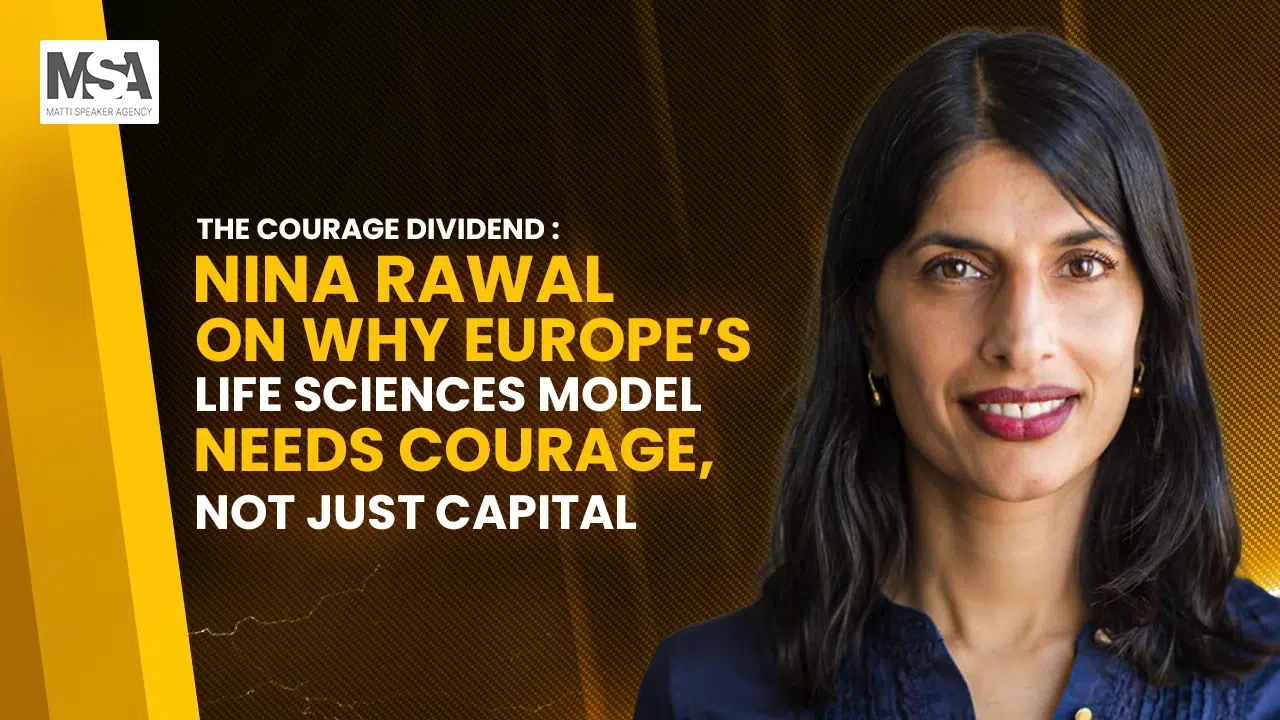
1. You’ve had a layered career, neuroscience PhD, management consulting, medical devices, and venture capital. How would you introduce yourself?
I work to close the gap between what science makes possible and who actually gets to benefit from it. Over 25 years across life science investing and strategy, I’ve served as Partner and Co-Head of Ventures at Trill Impact, led the life science investment team at Industrifonden, and held earlier roles at Boston Consulting Group and Gambro, the medical device company. I hold an MSc in Biomedicine and a PhD in Molecular Neurobiology from Karolinska Institutet, with research at Columbia University and Hôpital de la Salpêtrière, and I’m a World Economic Forum Young Global Leader. I’ve moved across those different roles because real change requires working across science, capital, and policy.
2. Looking back at that arc, what’s the thread that connects all of it?
The goal has always been the same: improving health outcomes for the underserved. I started in science, then realized that driving real change also takes capital and policy working together. Women’s health is one area where I’ve tried to put that into practice, through investments, board work, as well as writing and convening to shift policy and the commercial models that underpin it. The same instinct is why I’m focused on how Europe can build a commercially viable life sciences model that reaches patients and keeps Europe at the center of this industry.
3. You recently published “The Courage Dividend.” What’s the core argument, and why does it require courage rather than just better policy?
Geopolitical shifts including America First policies are forcing a reckoning Europe can no longer postpone: the rules of global pharmaceutical development are being rewritten, and European patients risk losing timely access to new medicines. Most of the response so far has been about damage limitation, more capital, more catching up, rather than strategy.
I think we’re having the wrong conversation.AI is collapsing the cost of developing new medicines, and Europe already has a faster regulatory template to get them to patients. Together, that makes a model that finally works commercially for Europe’s own market, and for the global markets that have long been treated as an afterthought. Serving the underserved stops being a cost and becomes the opportunity. But here’s the hard part: capturing it takes real coordination across policymakers, regulators, industry, and capital, all of whom have different incentives and timelines. That coordination is genuinely difficult. That’s the harder path, and that’s what I call The Courage Dividend – not optimism that it will happen, but a conviction that it’s worth trying to make it happen.
4. What’s your outlook on the future of life science innovation?
Our industry is the most meaningful one there is. We proved it during COVID with a vaccine in one year. Gene therapies now let blind children see and deaf children hear. Add AI and the possibilities expand dramatically.
But the business model is broken. it caters to only a subset of the world’s population, even though people everywhere will prioritize spending on health. Players that see this as an opportunity to experiment with new models will win the new game. I’ve seen enough crises create genuine opportunities that I believe change is possible. That’s what my work is all about, building at the intersection of science, capital, and policy to help enable that shift.
Bring Nina Rawal’s Vision on Life Sciences and Courage to Your Stage
Nina Rawal doesn’t just diagnose what’s broken in the life sciences business model; she offers a roadmap for turning geopolitical disruption into commercial and public health opportunity. As a keynote speaker on health innovation, venture capital, and policy, her sessions equip leadership teams and policymakers to close the gap between what science makes possible and who benefits from it. To bring Nina’s insights to your next summit or corporate event, contact Matti Speaker Agency today.